If jazz drum comping feels confusing, awkward, or like you’re never quite sure what to play or when to play it, you’re in good company. Most drummers struggle with comping because they’ve learned a bunch of patterns and coordination exercises but nobody ever showed them how jazz comping actually works in real music with real musicians.
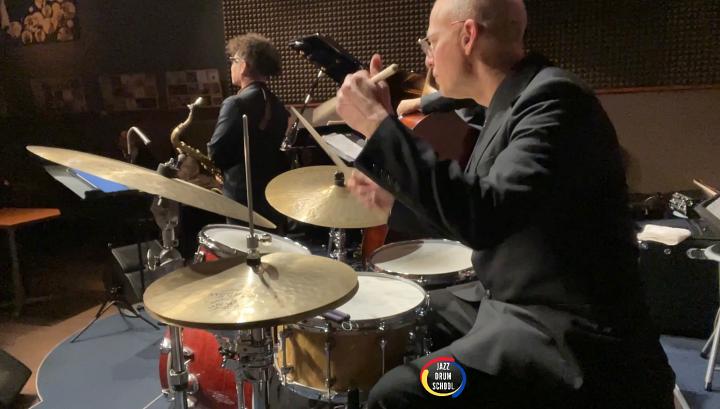
In this article, I’m going to fix that by breaking down jazz comping exactly the way I do in my YouTube video Jazz Drum Comping Made Easy: listening first, understanding the conversation, and learning how to respond musically instead of guessing.
I"ll walk through jazz comping step-by-step using an actual performance track. If you want to hear everything I’m describing, I highly recommend watching the video alongside this article.
Jazz Drum Comping Made Easy by Changing How You Think
Let’s start with the biggest mindset shift that instantly makes jazz comping easier. Jazz comping is not a coordination exercise. It’s a conversation.
A lot of drummers approach comping like a math problem: “Which limb goes where?” or “What pattern should I use here?” That’s backwards. Comping starts with listening, not playing.
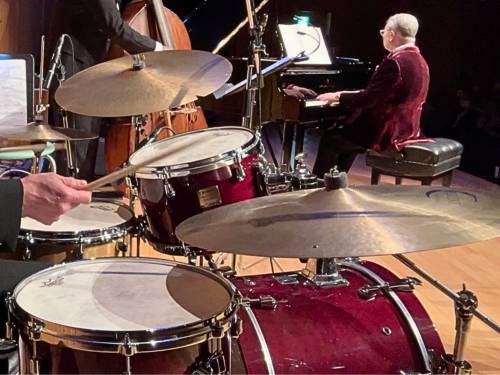
In the video, I use a track from my Brushes Mastery Course featuring two musicians I play with all the time here in Japan: pianist Philip Strange and bassist Tetsuro Aratama. One of the reasons Phil is such a great player to comp behind is that he speaks on the piano in clear musical sentences. And just as importantly, he leaves space.
That space is everything. Whenever a soloist leaves space, they’re inviting the band to respond. Jazz comping lives in those moments.
Jazz Comping for Drummers Starts with Listening, Not Chops
Here’s something I tell drummers all the time, and it surprises a lot of people. On the bandstand, don’t listen to yourself. Listen to everyone else.
When you’re comping, your job isn’t to worry about your hands, your fills, or whether your left hand feels good today. That’s practice room stuff. On a gig, the music is already telling you what to play—if you’re actually listening.
In the video, I first play the track and just listen. No drums. Just paying attention to:
• Where the piano phrases
• Where the phrases end
• Where space opens up
Those moments answer the question every drummer asks: “What do I play now?”
Learn Jazz Drum Comping by Understanding the Rhythmic Language
Jazz has a rhythmic language, and once you understand it, comping stops feeling random.
One of the most important concepts I talk about in the video is the third note of the triplet. That accent shows up constantly in jazz phrasing. Combine that with an emphasis on 2 and 4, and suddenly your comping starts to feel connected to the music instead of sitting on top of it.
If you live on counts 1 and 3, the music loses forward motion. If you lean into upbeats, 2 and 4, and triplet phrasing, things start to swing. That’s why jazz drum comping feels so different from rock or pop. The language is different, and you have to speak it.
Jazz Drum Comping Patterns That Work in Real Situations
Patterns aren’t the enemy. Using them blindly is. In the lesson, I demonstrate simple jazz drum comping patterns that work because they’re tied directly to what the piano is doing rhythmically. I’m not throwing ideas out randomly. I’m responding to rhythmic hooks the soloist is already playing.
A few guidelines that help immediately:
• Don’t hit everything the soloist plays
• Don’t copy phrases note-for-note
• Choose moments that actually matter
Sometimes the best comping decision is to not play. That restraint is what separates musical comping from busy comping.
Jazz Drum Comping Lessons That Actually Prepare You for Real Gigs
This lesson comes straight out of my Jazz Drum Comping Course, and the whole point of that course is simple: help you comp confidently in real musical situations, not just in the practice room.
A lot of drummers can play patterns, but freeze up when it’s time to comp behind a soloist. That’s why the course is built around playing with real music, real phrasing, and real space. Just like what you saw in the video.
Inside the course, we focus on:
• How to listen first and react instead of guessing
• How to leave space without losing momentum
• How to support the soloist without overplaying
• How to make your comping feel natural and conversational
If you can comp musically in these real-world situations, everything else gets easier. Bandstand playing, jam sessions, gigs, all of it. That’s exactly what the Jazz Drum Comping Course is designed to help you do.
Jazz Drum Comping Lessons: What Not to Play Matters Most
One of the biggest mistakes drummers make is trying to anticipate everything the soloist is about to play. That shuts down the music.
In the video, I talk about choosing which accents are worth responding to, and which ones you should let go by. Great comping isn’t about proving you hear everything. It’s about supporting the soloist’s ideas without stepping on them. This is something you only learn by playing with real music, not just exercises.
Sing the Solo to Unlock Better Jazz Comping
Here’s one of the most powerful things you can do to improve jazz comping, and almost nobody does it. Sing the solo.
Even if your pitch is terrible. Even if you’re embarrassed. Singing forces you to internalize phrasing, shape, and timing. Once you can sing the solo, you automatically know when it makes sense to play something. And when it doesn’t. That’s when jazz comping stops being stressful and starts being fun.
How to Play Jazz Drum Comping with Confidence
Watch the full video above.
If you take one thing away from this article and the video, let it be this: Jazz comping comes from listening, not guessing. When you truly listen to the soloist and the band, the music tells you what to play. Your job is to respond honestly, leave space, and keep the conversation moving forward.
• Practice with the drumless track from this lesson
• Explore my structured jazz drum comping lessons that use real music, not just patterns
Jazz comping is one of the most satisfying skills you can develop as a drummer. Once it clicks, everything else starts to feel easier. As always, keep swinging my friend!
Jazz Drum School is based in Japan and serves students worldwide.
Created with
Sign in or enroll to start learningSign in to keep learning